
TL;DR
The Canada Soccer nationals are annual amateur championships for adult, U-17 and U-15 clubs that qualify through provincial competitions. This guide covers the 2026 results, tournament format, schedules, host cities and practical ways players can use national-level match footage within their Canadian recruiting journey.
What Are the Canada Soccer Nationals?
They are Canada Soccer’s annual club championships for leading amateur teams from across the country. Six divisions compete during a concentrated October tournament period, with national titles awarded to adult and youth clubs.
The competition includes the men’s Challenge Trophy, women’s Jubilee Trophy, Boys’ and Girls’ U-17 Cups, and Boys’ and Girls’ U-15 Cups. Provincial leagues and cup competitions determine which clubs advance to the national stage.
The Challenge Trophy traces its roots to 1913, making the men’s championship one of Canada’s oldest club competitions. The women’s Jubilee Trophy began in 1982. National youth competitions were introduced in 1966 and later evolved into the current age-group structure.
Canada Soccer calls the event the heartbeat of Canadian amateur soccer in its official hosting overview. The organization highlights the tournament as the nation’s primary amateur soccer competition for more than 100 years.
These club championships do not involve Canada’s senior national teams. This matters because search results can mix amateur nationals with Canadian men’s or women’s international soccer.
For participating players, the tournament is the end of a much longer journey. Clubs first navigate local, league and provincial play before earning the right to represent their region. Reaching the event is meaningful even before the first national match begins.
2026 Nationals Schedule and Hosts
The 2026 championships were staged in Ottawa, St. John’s and Surrey. Youth competition ran from October 6 to 12, while the adult tournaments in Ottawa ran from October 8 to 12.
All six Canadian Finals took place on Thanksgiving Monday. This coordinated finish gave each host city a clear championship day while connecting the separate tournaments under one national event.
| Division | 2026 host | Dates | Champion |
|---|---|---|---|
| Challenge Trophy | Ottawa, Ontario | October 8 to 12 | Gloucester Celtic |
| Jubilee Trophy | Ottawa, Ontario | October 8 to 12 | Coquitlam Metro-Ford SC |
| Boys’ U-17 Cup | St. John’s, Newfoundland and Labrador | October 6 to 12 | Burlington Force SA |
| Girls’ U-17 Cup | St. John’s, Newfoundland and Labrador | October 6 to 12 | Glen Shields Juventus FC |
| Boys’ U-15 Cup | Surrey, British Columbia | October 6 to 12 | AS Blainville |
| Girls’ U-15 Cup | Surrey, British Columbia | October 6 to 12 | London Alliance FC |
Ottawa used Julian de Guzman Park and Matt Anthony Field for the adult competitions. St. John’s distributed 52 U-17 matches across King George V Park, Mount Pearl Soccer Complex and Topsail Field. Surrey’s U-15 competition centred on Newton Athletic Park.
What Happened at the 2026 Championships?
Gloucester Celtic and Coquitlam Metro-Ford SC won the adult trophies. Burlington Force, Glen Shields Juventus, AS Blainville and London Alliance captured the four youth titles.
Adult finals in Ottawa
Gloucester Celtic defeated Vancouver ICSF Columbus FC 3:1 in the Challenge Trophy Final. It was the Ottawa club’s fourth national championship in 14 years and its first title won on home turf. CS Dieppe earned the bronze medal.
Coquitlam Metro-Ford SC won its fourth Jubilee Trophy and its first in more than 30 years. The British Columbia club finished the tournament undefeated and beat Saskatoon LAFC Unity in the final.
Tournament MVP Erin Uchacz and 16-year-old call-up London Harrod scored in the women’s final. Harrod became the first 16-year-old to score in the women’s amateur Canadian Final since 2009.
Youth finals in St. John’s and Surrey
The four youth finals were decided by one or two goals. Canada Soccer’s youth championship report recorded these results:
- Glen Shields Juventus FC beat Suburban FC 1:0 in the Girls’ U-17 Final.
- Burlington Force SA beat CS Montréal Centre 1:0 through an added-time goal.
- AS Blainville defeated CTSA Scarborough GS Yellow 2:1 in the Boys’ U-15 Final.
- London Alliance FC defeated CS Mistral Sherbrooke 2:0 in the Girls’ U-15 Final.
How Does Qualification and the Tournament Format Work?
Clubs qualify through provincial league or cup pathways. At the finals, teams enter group play before moving into medal, semifinal or classification matches based on the division’s format.
The qualification pyramid is larger than the final tournament field. In 2025, more than 800 amateur teams competed in adult, U-17 and U-15 qualifying competitions. Canada Soccer supported a record 128 qualified teams across its national amateur events that year.
The 2026 adult championships followed a five-day format. Teams played group matches during the opening three days. The three group winners in each division were guaranteed medals.
The best-ranked group winner advanced directly to the Canadian Final and received an extra rest day. The other two group winners met in a semifinal for the remaining final place. This structure made goal difference and full group-stage performance important.
Youth tournaments use group and placement matches to produce complete standings. That means teams continue playing meaningful games even after championship qualification is no longer possible.
For players, the Canada Soccer nationals are an intense test of recovery, consistency and adaptability. A strong opening game helps, but coaches can also evaluate how a player responds later in a demanding tournament.
We see value in reviewing the full competitive context rather than treating one goal or save as the entire story. The broader Canada Soccer competitions system also includes player-development and futsal events.
Why Do Nationals Matter for Player Development?
National competition places players against unfamiliar opponents, styles and tactical systems. It also introduces the pressure of representing a club and province within a short tournament schedule.
At U-15 and U-17, players must solve problems quickly. They may face a direct team one day and a possession-focused opponent next. Coaches can assess decision-making, positioning, communication and reactions after mistakes.
Results matter, but development is not limited to the medal table. A player can show useful qualities in a placement match, difficult loss or defensive performance. Goalkeepers, centre backs and holding midfielders should not judge their value only through goals and assists.
In our recruiting work, we find that context makes footage more useful. Position, opponent, match situation and competition level help a viewer understand what the clip demonstrates.
Possible Canadian pathways after youth club soccer include U SPORTS, CCAA, League1 Canada and development environments connected to professional clubs. The CPL and Northern Super League represent professional destinations, but participation at nationals does not promise advancement to either league.
US college soccer can also be an option. Players and families should first understand eligibility, academics, finances and roster needs. No tournament or highlight reel guarantees a scholarship, signing, trial or match.
Nationals create evidence of performance. What happens next depends on development, fit, communication and decisions made by independent coaches and clubs.
How Should Players Build a Highlight Reel From Nationals?
Use national tournament footage to show repeatable soccer qualities. Start with clips that make your position, movement and decision clear to a coach watching without extra explanation.
A forward’s highlight video might show pressing, combination play and runs before finishing clips. A midfielder can include scanning, receiving under pressure, progression and defensive recovery. Defenders should show positioning, duels, passing choices and organization.
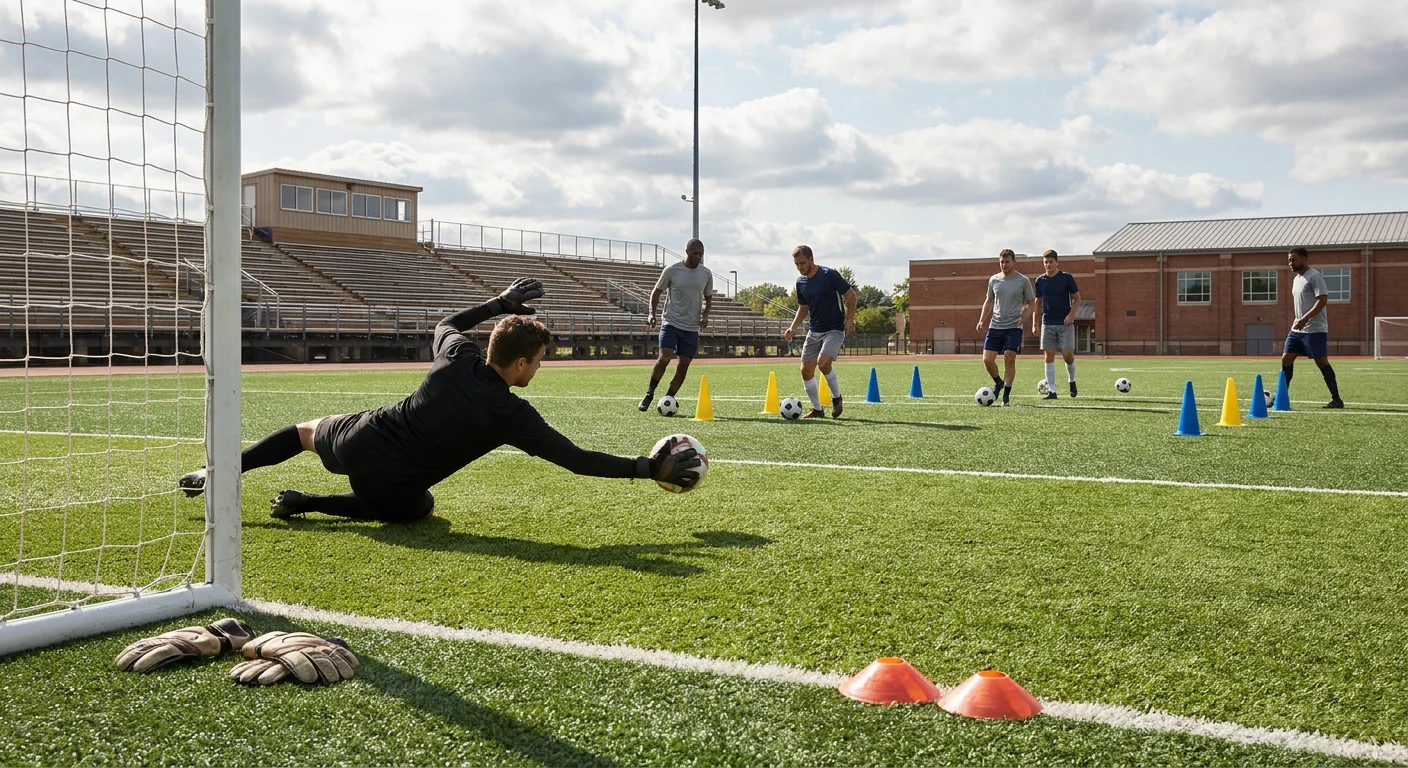
Goalkeepers need more than diving saves. A useful recruiting video can include handling, crosses, distribution, starting position and communication. Wider angles often explain these actions better than tightly cropped footage.
We recommend using simple labels for the event, age group, team, opponent and position. Identify yourself clearly before each sequence. Avoid effects that hide the run-up or interrupt the play.
Keep the original match footage available. A coach may want to examine actions before and after the selected moment. Full-game access also provides context that a short highlight reel cannot capture.
On FirstLook, we provide a connection platform where players post highlight reels and coaches, scouts and agents can browse them. We are not a scouting agency, and posting footage does not guarantee an opportunity.
Players should never post a personal phone number, email address, home address or school details publicly. Communication should go through parents, club coaches and official recruiting channels.
What Should Players and Parents Check Before Travelling?
Confirm the official schedule, venue, team requirements and ticket information before departure. Tournament details can change, so the competition page and club communication should remain the primary references.
The St. John’s U-17 guide listed tournament passes at $40 and daily passes at $10 for the 2026 event. Do not treat that pricing as a standard for another host city or year.
- Schedule: Check kickoff times, field locations and possible classification matches.
- Recovery: Plan meals, hydration, sleep and travel around a compressed match schedule.
- Equipment: Bring approved uniforms, boots for expected surfaces and weather-ready layers.
- Footage: Confirm who records matches and how families can access the files afterward.
- Communication: Keep recruiting contact with parents, coaches and official programme channels.
- Perspective: Treat the tournament as part of development, not a single verdict on a player.
We encourage parents to focus on preparation and support rather than promises of exposure. Scouts or coaches may watch, but their attendance and interest are never assured.
Players should also respect team rules around filming and social media. Ask permission before posting footage that prominently identifies teammates or opponents.
The championship experience can still be valuable without immediate recruiting contact. It provides competitive film, strong opposition and a clearer picture of where development is needed. Those lessons can guide the next club season, showcase plan and conversations with Canadian or US programmes.